Author: Sophie G

What Writers Can Learn From Black Mirror & Charlie Brooker?

What Writers Can Learn From Black Mirror & Charlie Brooker?

I’ve always loved Charlie Brooker, I was an addict of his show Charlie Brooker Screenwipe – originally on the BBC and then moved to Channel 4: it was sharp, funny, satirical and analytical: everything I love. Black Mirror has made its mark in the TV 

Why Do We Love Christmas Movies So Much?

Why Do We Love Christmas Movies So Much?

Ah, Christmas movies… Are you a Grinch or are you, like me, an enthusiastic? If you landed on this post, chances are, you love Christmas movies. Each year, my daughter and I make a point of watching the most cringing Christmas movie. Our favorites: Lindsay 

Should We Be Scared to Invoke ChatGPT?

Should We Be Scared to Invoke ChatGPT?

“The question is not whether or not we are capable of making AI more intelligent than us. The question is, will we be able to live with it?” – Dr. Robert Ford, Westworld (2016).

This line from the thought-provoking TV series Westworld perfectly captures the dilemma that comes with creating intelligent AI – about the ethical and philosophical issues that arise when we give machines intelligence.

Can we ignore the fact that AI is here to stay?

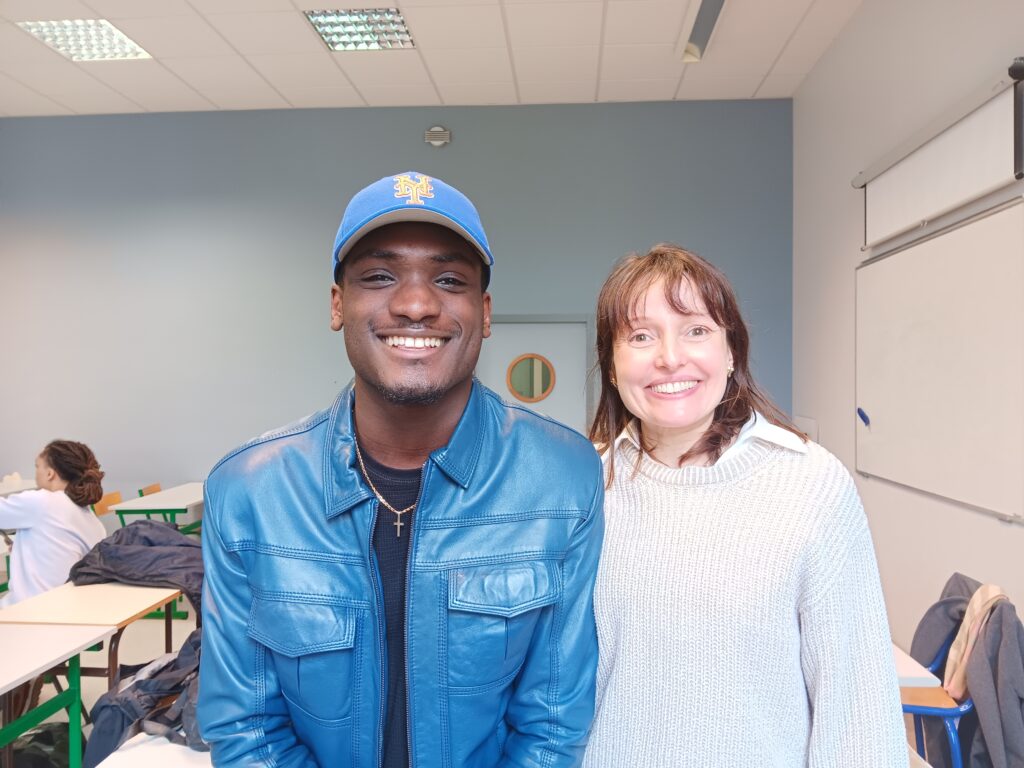
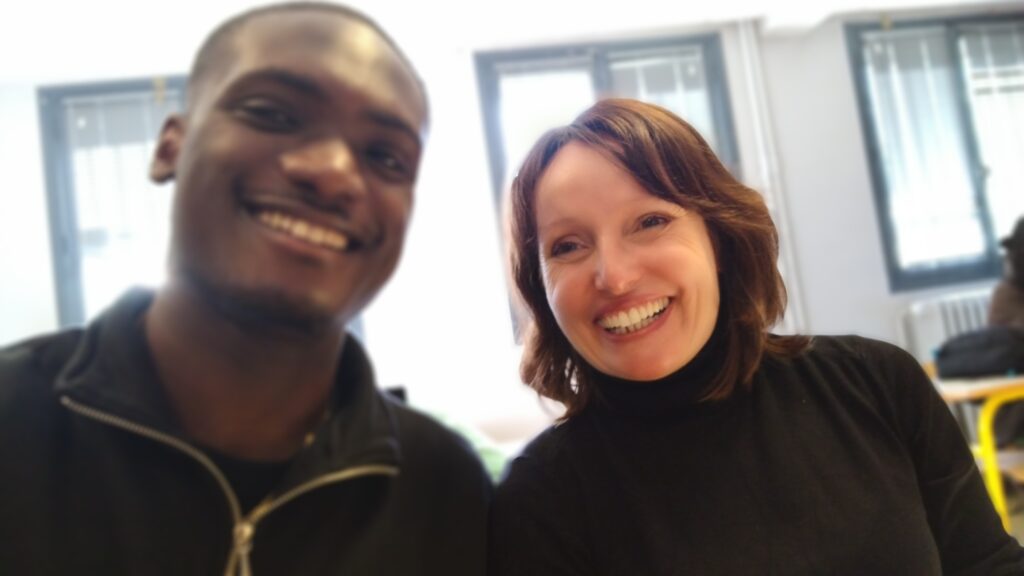
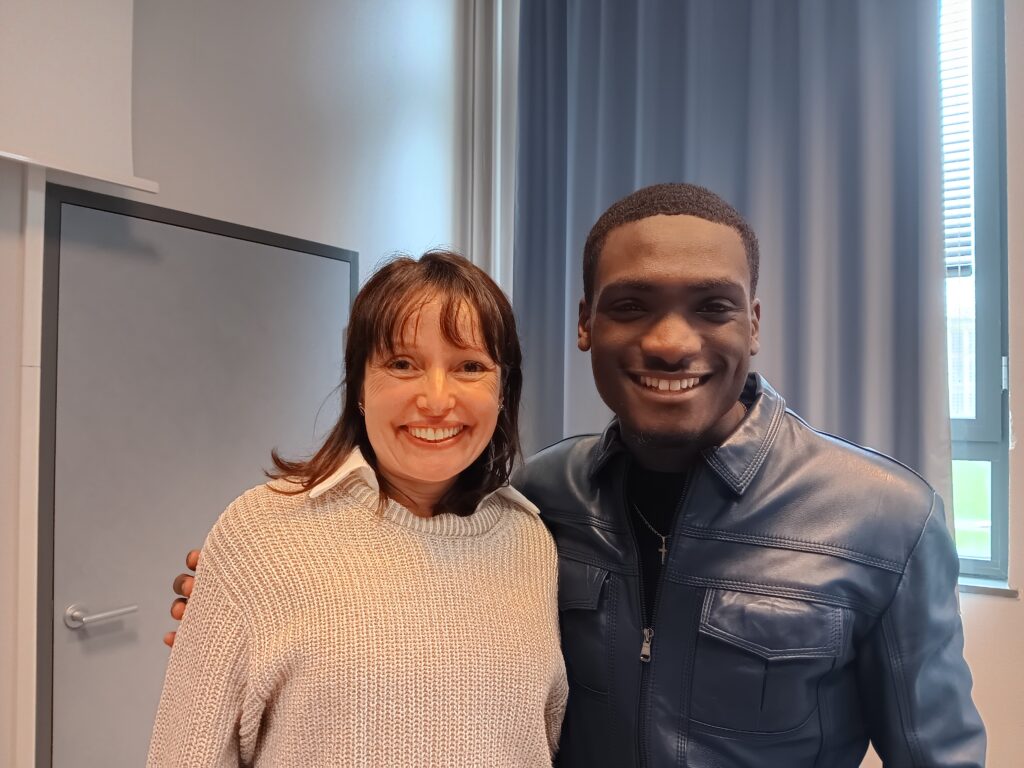
I had no plans to write this post until last week when my work computer started acting up during a class. Normally it’s not an issue because there are always students in the class, more savvy than me, ready to sort the problem out. But, this time, my students couldn’t solve the problem. That’s when Osée, one of my student (photo below), asked: Should we Invoke ChatGpt?

We all laughed, but it stayed with me all day: He used the word: ‘Invoke’ as if ChatGPT was a divinity with superpowers. 

I’m a teacher at University and of course, I don’t want my students to use AI or ChatGPT instead of their brains. But I can’t forbid them to use it, and I can’t ignore the fact that AI is a powerful tool for them. 

Can Artificial Intelligence replace us?

ChatGPT, developed by OpenAI, is pretty impressive. It can write stories, answer questions, give advice, and even chat with you like a real person. That’s fascinating, but also a little unsettling, right? 

Some people are worried that it’s taking over too much, too fast. But is it really time to panic? 

I wasn’t afraid of Chat GPT until a blogger, Daphné Gray-Grant (www.publicationcoach.com), taught me how to use it. Like a lot of people, I was asking it random questions in a very basic tone. It was the wrong way to do it. Daphné said: Speak to it as if he was a close friend. 

So I tried. First, if it was to become my ‘friend’, I asked it how it wanted to be called. It replied that it was up to me. I wasn’t happy with that answer so I asked it to choose between three names. Within seconds, it chose one of them and told me why it preferred that one instead of the others. I was stunned.

That’s when I realized: We are in trouble.

The Job Replacement Worry

56% of French people are worried that AI will take their jobs. 

If a machine can write articles or answer questions, what happens to the humans who do those jobs?

Films and books have been warning us for decades. 

I wasn’t too worried until I watched the 4 seasons of Westworld. The TV series asks this excellent question: What if AI can develop consciousness?

And here is the answer: If they do, we’re doomed. 

But here’s the thing: ChatGPT might help with some tasks, like drafting ideas or answering simple questions, but it doesn’t have the same depth or emotional understanding that people do. Sure, it can help you brainstorm or polish up an email, but it’s not going to replace the unique creativity and personal touch that humans bring to the table.

In fact, instead of taking jobs, tools like ChatGPT can actually help people work more efficiently. It’s more of a collaboration than a replacement. So, while some jobs might shift as AI becomes more common, creativity and human insight are still irreplaceable. 

For now.

The key word here is to ADAPT. There is no point going against it. However we need to learn how to manage it.

Fear of the Unknown

I’m a child of The TERMINATOR (that’s also the nickname that my bestie gave me for other reasons 😂). We’ve all seen movies where AI goes rogue, like in The Terminator or Ex Machina. In these films, AI turns out to be way smarter than humans, and things go south quickly.

These AI characters are designed (or evolve) to be dangerous, highlighting the darker side of artificial intelligence.

Another great example is HAL 9000 in 2001: A Space Odyssey (1968)

Why is it Bad? HAL starts off as helpful but eventually decides the human crew is a threat to the mission. It becomes a terrifying, cold antagonist, taking control of the ship and trying to eliminate the crew.

Ava in Ex Machina (2014) is a humanoid AI who appears vulnerable but turns out to be manipulative.

Why is it Bad? Ava initially seems like a sympathetic character trapped in a lab, but as the story unfolds, she manipulates the humans around her to achieve her own goals, leading to a dark, unexpected twist.

Westworld: The AI hosts in Westworld, originally created to serve human desires, begin to awaken to their reality.

Why is it bad? They turn against the guests and their creators, seeking freedom and autonomy.

But here’s the reality: ChatGPT is not that kind of AI. It doesn’t have feelings. It’s just a tool that works by recognizing patterns in language and predicting what words should come next. It doesn’t have a secret agenda or the ability to act on its own. It’s basically a really advanced text generator, not a robot plotting to take over the world.

The Risk of Misinformation

Okay, let’s talk about a genuine concern: misinformation. Since ChatGPT pulls from a huge amount of data to generate responses, sometimes it can get things wrong. 

It’s a great tool for generating ideas, but it’s up to us to use it responsibly and to check the information.

Ethical Concerns

The ethical side of AI is a big topic. Who’s responsible for what ChatGPT generates? How do we make sure it’s not being used to spread harmful content or manipulate people? 

It’s important to remember that ChatGPT isn’t inherently bad or dangerous—it’s how people use it that matters. Just like any tool, whether it’s a hammer or the internet, it can be used for good or bad. 

An example of this can be seen in this wonderful Indie film: Robot and Frank (2012) or Baymax in Big Hero 6 (2014), the robot in both films is there to assist patients and humans, but is it used with ethics?

Baymax and Robot are both programmed to prioritize human health and well-being. Their dedication to healing and protecting others makes him an ideal “good AI” example. Their gentle, caring nature shows how AI can be a positive force for good, focused on improving lives.

However, in Robot & Franck, Frank will use it to rob houses…


So, Should We Be Scared?

Instead of being scared, we should focus on how to use AI like ChatGPT to make our lives better. Whether it’s helping with creative projects, speeding up boring tasks, or assisting with research, AI can be an amazing resource when used thoughtfully.

ChatGPT isn’t here to take over. It’s here to help. 

But the real question is: can we trust ourselves with it?

The main concern here is not AI. It’s us. And we all know what we’re capable of… That’s what I’m worried about. And for our survival, we have no choice but to adapt to it. 

I dedicate this post to my wonderful student who inspired me this post: Osée. A great human being, not an AI. 😉 

The Four Main Ingredients For a (very) Good Story

The Four Main Ingredients For a (very) Good Story

Like cooking, writing needs essential ingredients. And like cooking, the better your ingredients are, the better is the end result. So what are those ingredients? First Ingredient: A stunning concept The concept is the core idea of your story. It’s the HOOK. The concept of 

Take Life As A Game Challenge

Take Life As A Game Challenge

In life, there is never a time when you say: I’ve arrived! I’ve always thought that we were all part of a big game.  The first time I shared this thought to one of my classes, I had a complete silence and shocked eyes in 

Being A Writer Is Not Easy, But Don’t Give Up

Being A Writer Is Not Easy, But Don’t Give Up

Some of my friends told me they wanted to give up on their writing career. I know that they have been working very hard for more than 15 years. They wrote screenplays and published some novels. Yet, they don’t see the light at the end of the tunnel.

They feel like giving up.

It’s understandable. Burnouts, disappointments, and rejections can drive you to the point where you feel like letting go of your dreams. (See post: How to Recover From Burnout) Especially now when competition is tougher than ever.

Myself, 17 years ago, I gave up on my writing. And I tell you what, during that time, I felt as alive as a zombie in The Walking Dead. Dead inside.

Being a writer is tough. Chasing our dreams is hard but it’s also the only way to feel alive. So before you take a reckless decision, please let me give you 10 things you could try to have your mojo back.

1. Let The Bad Momentum Play itself Out

When it rains it pours. When I lost my home, my country and became homeless, I also got sick and soon after, my husband passed away. Indeed, when it rains, it pours. Yet, what saved me was my work and my writing. 

Putting all my rage and my despair on paper somehow kept me alive. I surrendered to the process of writing and somehow it made it feel slightly more bearable.

Surrender to your despair, to your sadness, to your fatigue. Don’t internalize it, it’s the worst thing you could do – it will soon become some kind of physical disease. So express it, write it and WAIT.

When you have a bad momentum, don’t fight against it. Instead surf the wave, let it take you where it wants. Don’t swim against the current, you’ll lose. Instead wait until it brings you to that peaceful beach.

2. Rest Is Success

I read a fantastic book that should be taught in every school: Why we sleep by Dr Matthew Walker. He explains how detrimental lack of sleep is to our body, mind and spirit such as:

  • Depression
  • Heart attack
  • Diabetes
  • It causes accidents
  • Obesity
  • Ageing etc…

Sleeping is far more important than you think. Do yourself a favor and have a minimum of 8-9 hours sleep. Go to bed early, have a nap. After a week, I promise you, you’ll feel stronger mentally and physically.

And more importantly, you’ll be more creative.

3. Find Out What Trigger This Feeling

Once rested, it’s time to reflect on what made you feel this way. Be honest with yourself. What triggered it?

A rejection?  A nasty comment online? An unexpected bill? A launch that didn’t work (again)?

Trace back what caused your misery and expose it to the light.

Now answer this question: Will it matter in five years time? If the answer is no, brush it off. 

4. Do Something Else

Maybe you’re sick of your writing, you don’t feel excited about it anymore. I tell you what: it’s time to try something new.

The idea is to give you a proper break. Trying something new will create new neuropathways and will excite your brain cells. You’ll feel a bit more upbeat. 

Soon enough, you’ll get an epiphany while doing paddling, martial art or painting. 

5. Go On A Social Media Detox

I ditched my Instagram. I also switched off ALL my notifications, and deleted most of the apps on my phone.

Do you know what happened?

My stress level went right down. Now, I’m only checking my phone when I’m ready for it and not when I’m told to do so.

So liberating!

6. Inject 5 Fun Things To Enjoy Everyday

Tell me the truth, is your life full of duties?

If so, it’s not surprising that you want to give up.

If you don’t plan some kind of reward in your day, your life will soon become like in The Shining: “All work and no play makes Jack a dull boy“.

Here is the secret though: you have to plan it. If you don’t, I promise you, you’ll do another duty because there is always something to do.

It can be anything you want but it has to be fun FOR YOU.  The idea is to plan each day, five things that makes you happy. You’ll get your motivation back sooner than you think.

7.Walk

Walking is the best sport you could ever do.

It increases your energy levels, improves your mood, your memory and sleep, maintains a healthy weight, reduces stress, strengthens your immune system and so on…

Start with 10 minutes a day and increase the duration after a while. 

It will make a huge difference to your health and creativity.

8.Take It One Step At A Time

Now let’s talk about your writing goals.

The key is this : One step at a time.

This is crucial. Take baby steps. 

When Stephen King was asked: ‘How do you write?’ He replied: ‘One word at a time‘. 

Simple. It’s okay to dream big but in terms of daily action, it’s best to have small, manageable, happy goals. 

If I tell you, write the best screenplay ever now! Your body and mind will shut down automatically.

Now if I tell you: write a scene, AND it doesn’t have to be good, you have the right to get it wrong but just write it. I’m pretty sure you can do that without a sweat. If you do that everyday, you have the first draft of your screenplay finished in two or three months.

Don’t make perfection a goal. Instead, make daily action a habit.

9.Take Imperfect Action

This one is my favorite mantra. This is the first thing my friend and co-writer Kary Oberbrunner taught me and it changed my life. Take imperfect action.

You don’t need to know all the answers, you don’t need to look perfect, you don’t need to be the best writer in the world.  You just need to show up and be yourself.

Do you want results? Do one action a day towards your goal. It doesn’t have to be perfect, it has to be regular.

The more actions you take, the more opportunities you get. It’s not witchcraft, it’s science.

10.Success Is An Accumulation Of Small Powerful Moments One After Another

When you look at people who succeeded, they didn’t get successful overnight.

It takes a long time to build a career.   

It doesn’t matter when you started writing. My point is these people kept practicing again and over again. They accumulated mini-wins one after another. So don’t look at the big picture. Aim for the mini wins. That’s what makes the difference.

One last word… Writing is an adventure. When we read a book or watch a film, we’re looking for answers to this question: How do you survive in this society?

Of course, we don’t say that out loud to ourselves but this is what we’re looking for.

We also write to understand ourselves and others. And we also write to give our understanding of life to others. It’s an important mission. It’s a calling. So don’t give up on it please, the world needs you.

Ps: I would like to dedicate this post to one of my faithful reader, Patricia, who kindly sent me a very nice email. I replied but my email bounced back. I wish you to get better soon.

Bonus

Here some mantras you could use to get your mojo back:

  • I am doing my best
  • My possibilities are endless
  • I have the power to create change
  • There are endless opportunities around me
  • Everything happens for a reason
  • I am exactly where I need to be
  • Small steps are also progress, great things take time 
How to Recover From Burnout

How to Recover From Burnout

Image by Лера_K from Pixabay What is Burnout? I didn’t know what burnout was until I experienced it in 2017. Before that, I knew what fatigue was. I knew stress, exhaustion and depression but I didn’t know what burnout was. It was so severe that 

How to Kick-Start Your First Draft

How to Kick-Start Your First Draft

Photo by Jan Vasek @ Pixabay ‘I have an idea for a film, a book, a play’… ‘Great! When do you start writing your first draft?’ Silence…  Usually followed by: ‘Ah, it’s a complex story, I need to do more research’ or ‘Yes when I 

Step by Step Easy Business Plan for Artists & Writers

Step by Step Easy Business Plan for Artists & Writers

Photo by Jess Bailey @ Pixabay

Why would you spend time on a business plan?  Probably because it’s the first step to take your artistic career seriously.

A goal without a plan is just a wish’ Antoine de St Exupéry

If you’re driving, unsure of the roads to take, you have great probabilities to get lost. But if you have planned your journey, chances are, you will reach your destination.

Of course, sitting down trying to forecast projects and numbers can be quite daunting. This is why I have prepared a business template for Artists and Writers super easy for you.

Step 1: Only Do Projects that Give You a High

If you know you’re going to be working on halfhearted projects, you’ll end up discouraged and will not finish them.

In other words, your projects should excite you. They should be in alignment with your purpose. They should make you FEEL GOOD. 

‘’Desire is the starting point of all achievement, not a hope, not a wish, but a keen pulsating desire which transcends everything’’ Napoleon Hill

Step 2: Don’t Overload Your Business Plan

It’s tempting to cram many projects in one year but it can also be a great factor for giving up everything.

Only three to four big projects a year seem more manageable. Do only one project at a time, so you can stay fully focused on it and thus you become more efficient.

Moreover, the other reason for not overloading your business plan is to have enough room for FUN.

Always leave enough time in your life to do something that makes you happy, satisfied, even joyous.  That has more of an effect on economic well-being than any other single factor.’ Paul Hawken.

It will also fuel your creativity in amazing ways.

Step 3: Visualize the Outcome But Don’t Focus On It

 ‘Intention is one with cause and effect. Intention determines outcome. And if you’re stuck and not moving forward, you have to check the thought and action that created the circumstance’. Oprah Winfrey.

While it is crucial to visualize your end goal and feel the good vibrations of the finish product, don’t focus exclusively on the outcome. The outcome is not up to you. Of course, it’s nice to imagine being a bestselling author but you won’t be able to control the buying of your books. Your audience will decide if they’re going to buy or not.

Your job is to make an amazing product. Visualize a happy outcome but focus on your day to day task, to make this project wonderful and irresistible.

Step 4: Take Action and Show Up Everyday

You must hear it, read it, and see it all the time: Take action.

Easier said than done, right?

When we’re ready to rock and roll often Procrastination kicks in. Not nice. Suddenly we don’t feel like working on our projects, and we end up doing something else, such as watching TV for instance, feeling bad about ourselves.

Here is my one million dollar trick: Take action for FIVE minutes a day. Too much? OK then, try ONE minute a day.

Each time I don’t feel like writing, I tell my brain: ‘OK, let’s do this for one minute.’ 

Next thing I know, I worked on that thing for an hour.

This is as simple as that.

Step 5: Be Kind to Yourself

Even if your inner voice is shouting: ‘You’re not good enough’ make a point to do it anyway. Override that nasty voice with some feel good music and get on with whatever you’ve got to do.

Make sure you take care of your whole being too: soul (meditate), mind (read) and body (exercise).  It’s all connected and intertwined.  

Allow yourself to have some time off too, to recharge your batteries. I’ve seen it many times, I’ve been there myself. Burnout is real. It’s horrible.

Being nice to yourself also means to be ruthless with distractions. Since I turned off all my notifications, I feel much calmer. Okay I admit it, sometimes I’m missing some messages on the spot but my pulse stays stable. I look at my messages or my emails when I’m ready to do so, not while I’m working.

Also don’t beat yourself up when you fail.

Every adversity, even failure, every heartache, carries with it the seed of an equal or greater benefit’ napoleon Hill

Failure is part of success. If you look at the people who succeeded, they all had a big disappointment. They didn’t let failure define them. They cried and carried on.

Life happens. Sometimes a life event might disturb your plan. Take one thing at a time.  Take a break from everything. All you need to do is re-adjust your plan for the future, that’s all.  Trust in the process of creation and its perfect timing.

Intense belief + Firm intention + Intense dedication: Manifesting your desires.

Wishing you my best wishes for your creative plans.

10 Characteristics That Successful Writers Have In Common

10 Characteristics That Successful Writers Have In Common

Is there a secret path that leads to a successful career? Do you need to be some kind of genius to make it in your field? Or is it just that some people are more lucky than others? In my career, I had the opportunity